 Skip to main content.
Blog
Fintech Futures: Building the Invisible Layer of Everyday Money

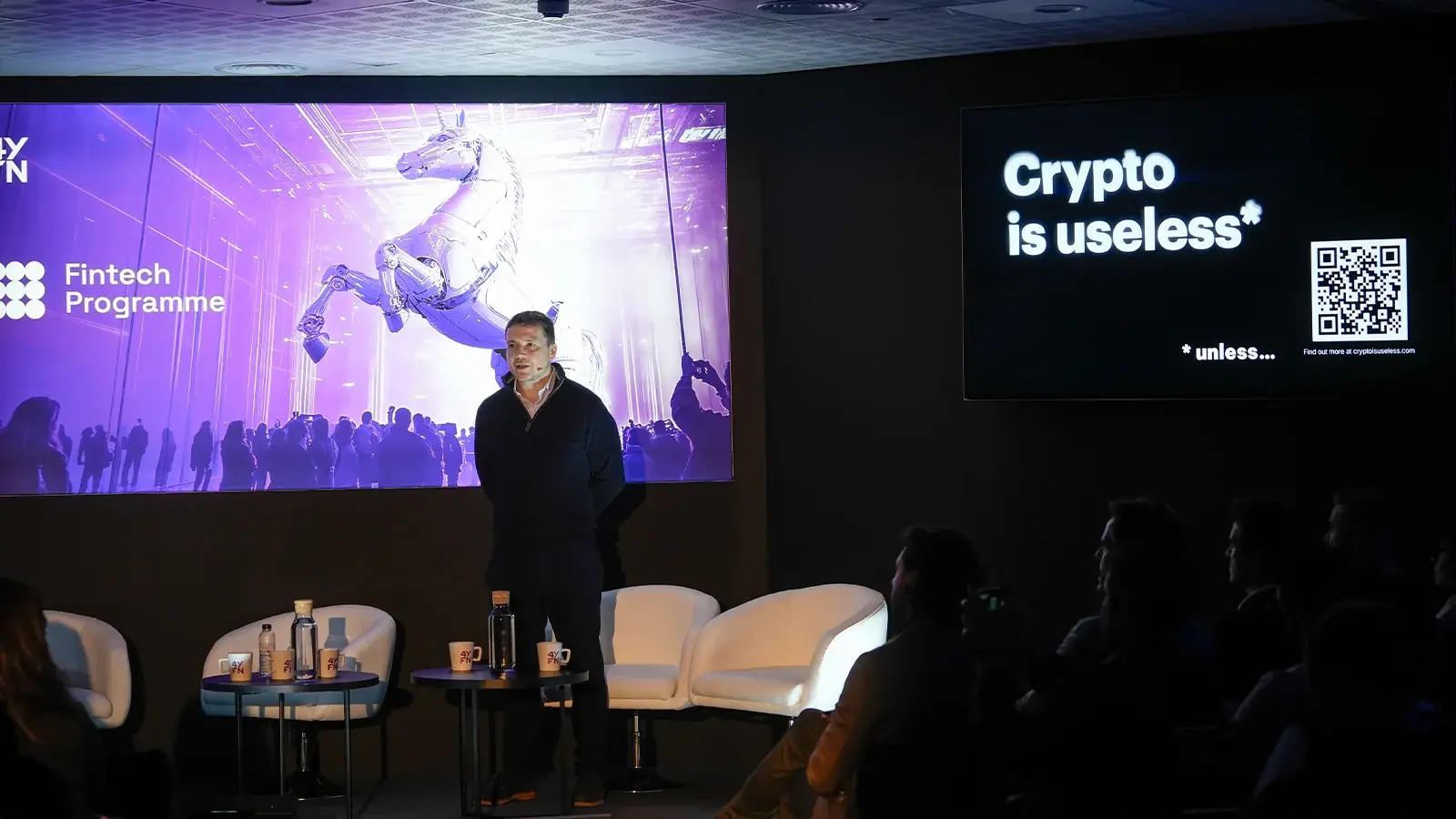
4YFN’s upcoming Fintech track spotlights the startups using AI to build an invisible layer that moves money in real time, proves identity without friction, and ships compliance as part of the product.
Europe is particularly well-positioned for this future shift: the EU Instant Payments Regulation entered into force in 2024 with staged obligations rolling through 2025-26, turning instant euro transfers from “nice-to-have” into a baseline.
Capital is following substance. Global fintech funding topped $10B for two consecutive quarters in 2025, but it’s concentrating in revenue-proven categories like payments, risk, regtech and B2B APIs.
In parallel, Europe’s policy roadmap gives founders clear adoption milestones: the digital euro is in a preparation phase until October 2025, after which the ECB will decide the path forward. Officials now flag 2029 as a realistic launch horizon if legislation aligns.
Tokenisation is moving from manifesto to machinery. BlackRock’s tokenised cash fund BUIDL passed $2B in assets this year, showing that programmable money can already serve mainstream treasury needs. As adoption grows, it is creating new demand for custody, compliance and audit tools – a sweet spot for fintech startups.
The UX leap won’t come from buttons; it will come from latency disappearing. If a freelancer in Barcelona gets paid now instead of tomorrow, or if disputes close in hours not weeks, trust compounds. Barcelona is a bellwether: a deepening fintech base with 362 companies and 136 funded startups underscores its role as a Europe/LatAm bridge where inclusion and infrastructure meet.
Artificial intelligence is accelerating the move from reactive finance to proactive operations. Fraud systems model intent and context, underwriting becomes continuous decisioning, and support resolves issues with audit evidence pre-assembled. Investors are rewarding platforms that reduce loss ratios and reconciliation time while satisfying resilience and audit requirements – exactly the quality-over-quantity pattern visible in the first half of 2025.
Partnerships still matter, but the tone has changed: banks are distribution and resilience, startups are velocity and focus. At 4YFN26, Santander –a confirmed exhibitor at 4YFN26’s Fintech track – underscores that direction. Its Santander X initiative supported over 52,000 businesses and projects across 11 countries in 2024, while its PagoNxt unit launched a real-time payments corridor to China this year. The bank is also building on its role as an AI-native institution: it has partnered with OpenAI to accelerate its artificial intelligence strategy, embedding copilots across developer, customer and compliance workflows. It’s a pragmatic blueprint for pilot-to-production, with trust built in.
If the first wave of fintech changed how finance looks, the next will change how it works. Put at its simplest, the future of fintech feels less like a revolution and more like a re-platforming. The most valuable companies of this cycle will turn standards into simple interfaces, and surface proof not just promises.
Join us in Barcelona to meet the teams shipping the next of fintech innovation. 4yfn.com/tracks/fintech
Track Tags: Fintech, Infinite AI, Corporate Innovation, Cyber Security, Health Tech, Investors, Founders Academy