 Skip to main content.
Press Release
10th edition of the Red Cross Humanitarian Technology Awards Solutions for dyslexia, parasitic diseases, and hands-free mobile phone control are among this year's winners
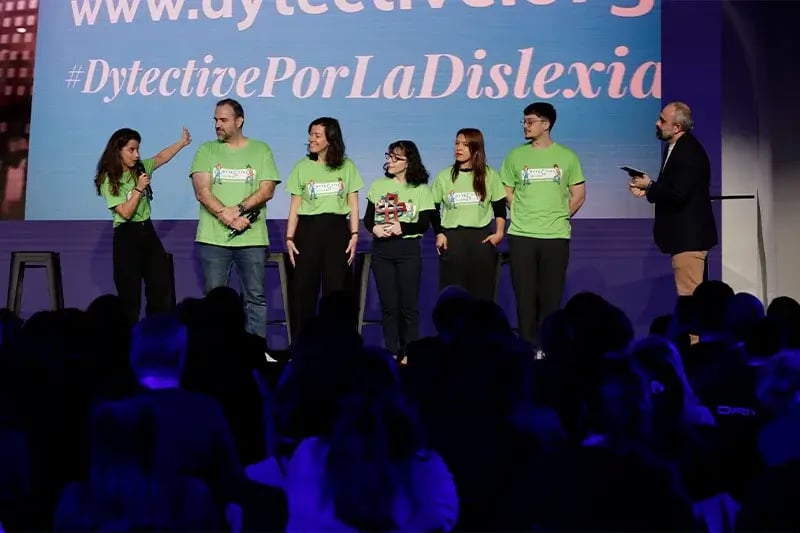
- The Spanish Red Cross announces the winning projects in this 10th edition, in which 40 applications were submitted.
- For the past 10 years, the Red Cross has recognized and supported various initiatives that use technology to transform lives.
5 March, Barcelona 2026. The Spanish Red Cross celebrates ten years of awarding innovative solutions that transform humanitarian action through technology.
This special anniversary marks the culmination of the 10th edition of the Humanitarian Technology Awards, an initiative launched in 2016 to recognize and reward exceptional projects that use technology in innovative ways to address social challenges and generate a positive impact on society, especially for people in vulnerable situations, while never losing sight of the importance of direct, person-to-person contact.
The awards will be presented at 4YFN26 during MWC in Barcelona on March the 5th.
This year, forty initiatives were submitted, offering solutions to improve the quality of life and independence of people with disabilities, enhance literacy by enabling the detection of dyslexia risk, and transform the diagnosis of parasitic diseases with the support of AI, among other initiatives.
In this 10th edition, the jury of the Humanitarian Technology Awards has selected 5 exceptional projects that have been awarded for their innovative and creative approach in the application of technology for the benefit of humanitarian actions and disadvantaged groups: two main prizes, one special mention and two initiatives awarded in the JASE category ‘Young Although Socially Entrepreneurial’.
1st Prize: Dytective
This is a scientifically backed digital educational tool, designed by Change Dyslexia, that can detect the risk of dyslexia in just 15 minutes and improve reading and writing skills through more than 42,000 games.
Powered by EduCaixa, Dytective automatically adapts to each child's level, making it useful both for identifying learning difficulties and for general educational support.
Its early, personalized, and accessible approach makes a decisive contribution to educational inclusion and equal opportunities from the earliest stages.
2º Prize: Multiplexai
An innovative solution that applies artificial intelligence to the analysis of blood microscopy images, functioning like an “Instagram filter” capable of quickly and accurately identifying disease patterns.
The system, running on a mobile phone connected to a microscope via a 3D-printed adapter, delivers expert results in real time, democratizing access to advanced diagnostics even in resource-limited settings.
This initiative is supported by the Barcelona Institute for Global Health, Spotlab, the Carlos III Health Institute, Ahmadu Bello University and Hutzpa Innovation (Nigeria), the Manhiça Foundation (Mozambique), Félix Houpouët-Boigny University (Ivory Coast), Llima University (Ethiopia), and the Sacro Cuore Hospital of Calabria (Italy).
Special Mention Award: Mouthx
A high-precision intraoral controller designed to allow people with reduced mobility—such as those with spinal cord injuries or ALS—to operate computers, mobile phones, and tablets hands-free.
The device functions as a custom-made dental splint that translates tongue and jaw movements into digital actions, significantly improving the autonomy, communication, and quality of life of its users.
Its technological, inclusive, and person-centered approach represents a significant advancement in the field of universal accessibility.
JASE (Youth but Socially Entrepreneurial)
Within the JASE (Young but Socially Entrepreneurial) youth category, two initiatives have been recognized:
One Chance
This proposal is recognized for its innovative, accessible, and low-cost nature, effectively complementing existing defibrillators in public spaces and offering a low-cost, easy-to-implement alternative that requires no prior medical knowledge.
The device is particularly suitable for installation in any public space, including, as a priority, educational centres, where it maximizes its life-saving potential and strengthens early response to emergencies, contributing to a safer and more heart-healthy society.
Guidex
This innovative technological solution, presented by 15-year-old students, aims to improve the mobility and independence of blind people through a haptic system integrated directly into the soles of their shoes.
The proposal stands out for its inclusive and discreet approach, which allows for safe orientation without interfering with the user's daily life, significantly contributing to accessibility and independent living.
These initiatives, along with a selection of award winners from previous editions, will be showcased in an exclusive space dedicated to the awards.
The press conference will take place on March 5th in Barcelona, at Y4YFN of the Mobile World Congress (stand 8.1C, 22B).
The Spanish Red Cross Humanitarian Technology Awards ceremony entitled “10 Years Transforming Lives: Humanitarian Technology with Commitment”, will take place next at the Agora Stage, at 12h.